
Author’s Note: This post was originally published in February 2019. I updated it with current suggestions for teachers of Black students to help create classrooms that are productive learning spaces for them to see themselves as capable and confident learners.
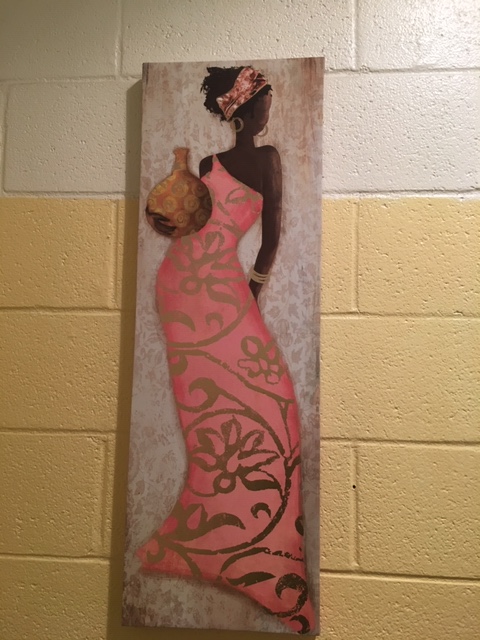
In 2019, I was in a school bathroom in North Carolina and saw a beautiful painting of an African woman dressed in African dress hanging on the wall. I was immediately filled with awe and joy because the painting radiated beauty and was a positive image in a surprising place. I am often one of few African American women in the room when I visit school districts and seeing art or something that connects to my culture is like looking in a mirror and seeing a reflection of myself.
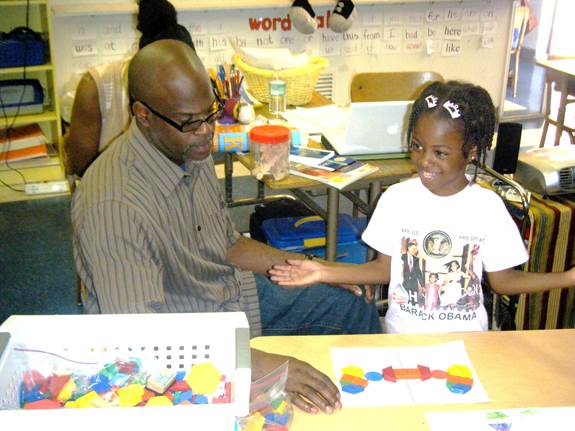
As a classroom teacher, I made it a practice to display pictures of my students to document their classwork, discussions, and events to show how they engaged in instruction. The images appeared everywhere: in presentations, bulletin boards, and in newsletters shared with their families. I wanted students to see themselves as mathematicians in the classroom. I also encouraged students to share images of their family and friends too.

Culturally responsive researcher, Dr. Sharroky Hollie, in Culturally Responsive Teaching says that students need to see positive images of themselves because it affirms their background and helps students feel welcomed in their learning communities.
Feeling connected to their learning communities help students feel comfortable and able to move towards being independent learners, according to Zaretta Hammond in Culturally Responsive Teaching and the Brain. She says that the brain needs to see at least three positive representations for every negative representation due to the brain’s negativity bias. The brain uses this bias to look out for threats to our safety and well-being which can be triggered in unwelcoming classrooms. When students feel threatened or triggered in their learning environments, they feel like they are under attack causing their brain and body to either flee, freeze, fawn, or fight to keep them safe. The brain isn’t able to take in any information in those moments and learning stops.
Recent studies show the positive effects of cultural representations on student achievement.
A 2016 study by the American Educational Research Associations concludes that black students were more successful when taught by a Black teacher. The same students were 3 times more likely to be assigned to gifted programs.
A Chicago university announced that it is investing a $1 million dollars to recruit men of color to elementary education as part of the Call Me MISTER, Mentors Instructing Students Toward Effective Role Models. This initiative is modeled after Clemson University’s program that began in 2000.
Since 2019, colleges and universities have increased programming for diverse Black students such as TRIO and other learning community programs to support undergraduates through graduation.
A few ways to represent Black students at your school/in your classroom:
- Add positive images of Black students engaged in work to bulletin boards inside and outside of classrooms
- Have a mix of images of legendary past and present Black cultural icons
from all walks of life (academic, entertainment, and sports) that represent your students in your classroom - Hang inspirational quotes from Black cultural icons in your classrooms and around schools.
- Curate books (print and digital), magazines, videos, and podcasts for your listening and reading libraries with authentic Black characters.
- Create playlists with school-appropriate music from Black artists (past and present). When I was in the classroom, I had my students share their favorite songs to hear during classwork time.
In what ways do you represent the Black students in your schools/classrooms to create the vibe of a learning community?

